Africa Supply Chain & Energy Bulletin, Edition 7 (October 2026) A joint publication by Desiderio…
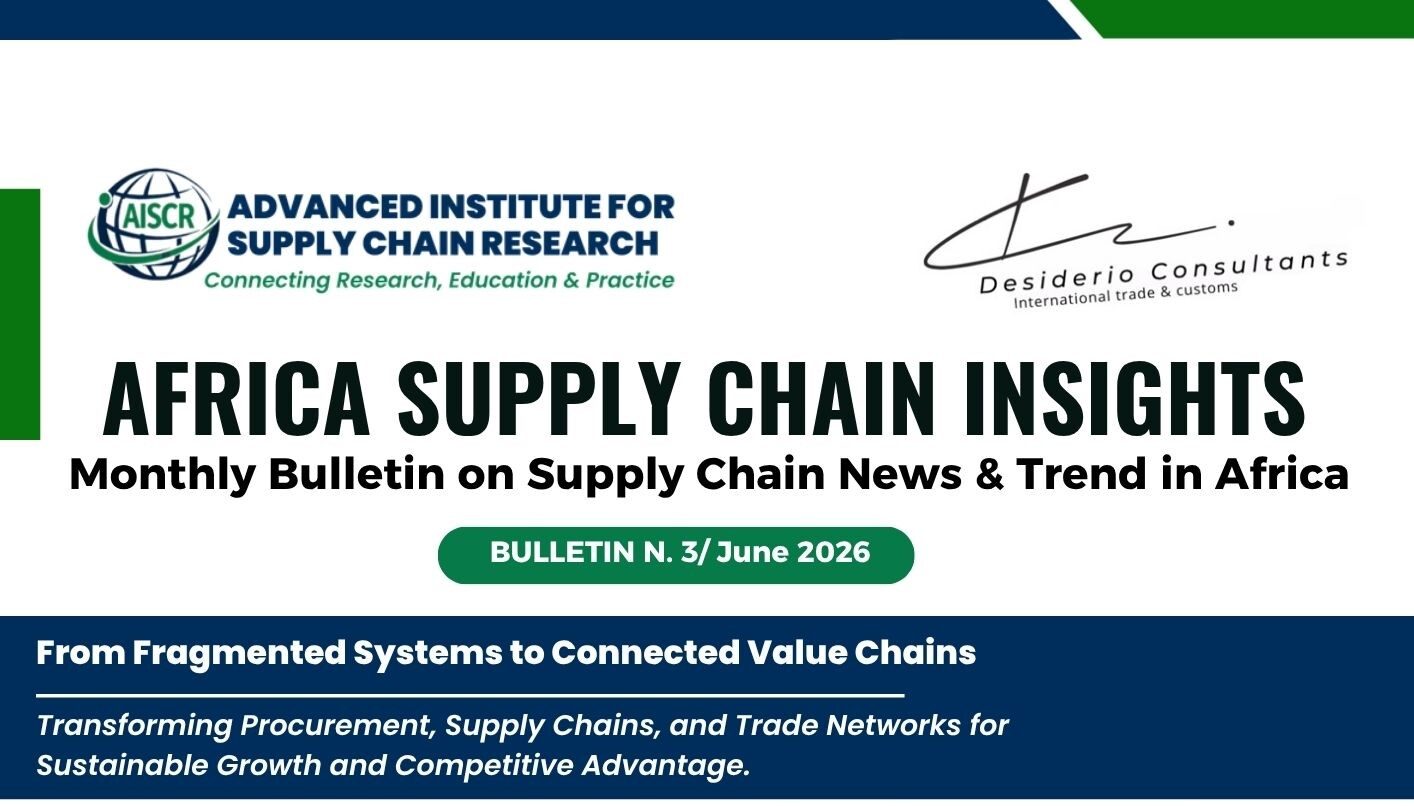
Africa Supply Chains Insights – June 2026 Edition
Africa Supply Chains Insights – June 2026 Edition
Monthly Bulletin on Supply Chain News & Trend in Africa
From Fragmented Systems to Connected Value Chains: Advancing Africa’s Supply Chain Competitiveness
The June 2026 edition of the Africa Supply Chain & Energy Bulletin explores some of the most pressing issues shaping Africa’s procurement, supply chain, trade, logistics, and industrial development landscape. Published jointly by AISCR and Desiderio Consultants, this edition examines the structural challenges and opportunities influencing Africa’s competitiveness in an increasingly interconnected global economy.
Key Highlights
AfCFTA Implementation: Lessons from Value Chains and Regional Blocs
As Africa advances the implementation of the African Continental Free Trade Area (AfCFTA), emerging evidence suggests that the continent’s greatest challenge is no longer tariffs alone, but the ability to connect production systems, logistics networks, regulatory frameworks, and digital infrastructure into integrated value chains. The bulletin highlights how fragmented implementation, non-tariff barriers, weak data interoperability, and institutional silos continue to undermine trade efficiency and regional competitiveness.
Horn of Africa Trade Hampered by Data Fragmentation and Structural Imbalances
Despite significant investments in ports, logistics corridors, and transport infrastructure, regional trade in the Horn of Africa continues to face systemic inefficiencies. The bulletin examines how fragmented information systems, limited real-time coordination, and structural trade imbalances contribute to higher logistics costs, cargo flow disruptions, and reduced supply chain performance.
Why Africa’s Special Economic Zones Are Failing Regional Supply Chains
Special Economic Zones (SEZs) have attracted investment and expanded export-oriented production across Africa. However, many continue to operate as isolated enclaves with weak linkages to domestic suppliers and regional value chains. The bulletin explores how stronger integration between SEZs, local enterprises, and regional markets can unlock greater economic value and industrial development.
Emerging Fertiliser Supply Risks
The bulletin also highlights growing concerns over global fertiliser supply constraints and the implications for African food systems. With many countries heavily dependent on imported fertiliser, supply disruptions and price volatility pose significant risks to agricultural productivity and food security. The article discusses alternative approaches, including local production, bio-based inputs, and sustainable agricultural practices.
Building Connected Value Chains for Africa’s Future
A common theme emerging throughout this edition is the need to move from fragmented systems toward integrated value chain ecosystems. Achieving this transformation will require stronger institutional coordination, harmonized regulations, interoperable digital systems, efficient logistics networks, and deeper collaboration between governments, industry, and development partners.
The future of Africa’s competitiveness will depend not only on infrastructure investments and policy reforms but also on the continent’s ability to build connected, resilient, and inclusive supply chain networks that create value across borders and industries.
Download the June 2026 Africa Supply Chain & Energy Bulletin to explore these insights and stay informed about the latest developments shaping Africa’s supply chains, trade systems, and energy sector.
AISCR_Desiderio Bulletin June 2026

Related Posts