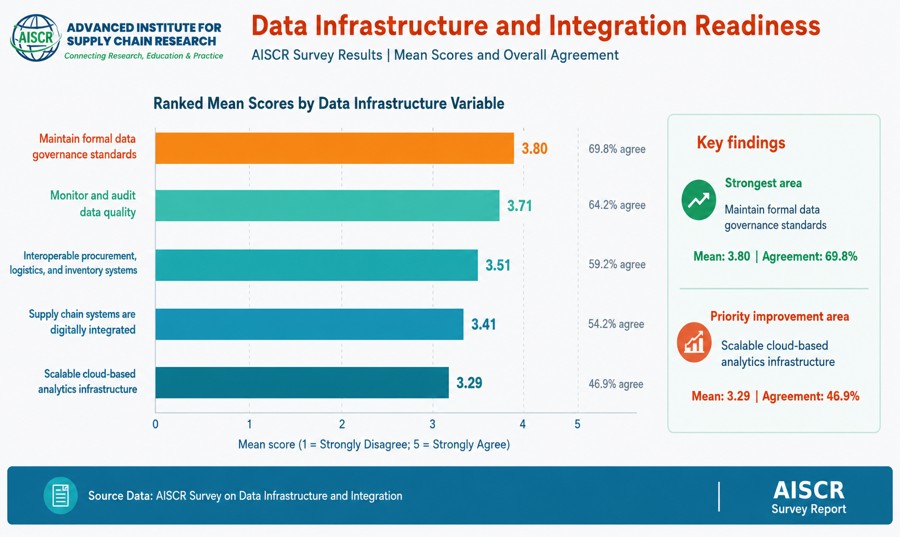
Is Africa’s Supply Chain Data Infrastructure Ready for the AI Era? Data Infrastructure and Integration…
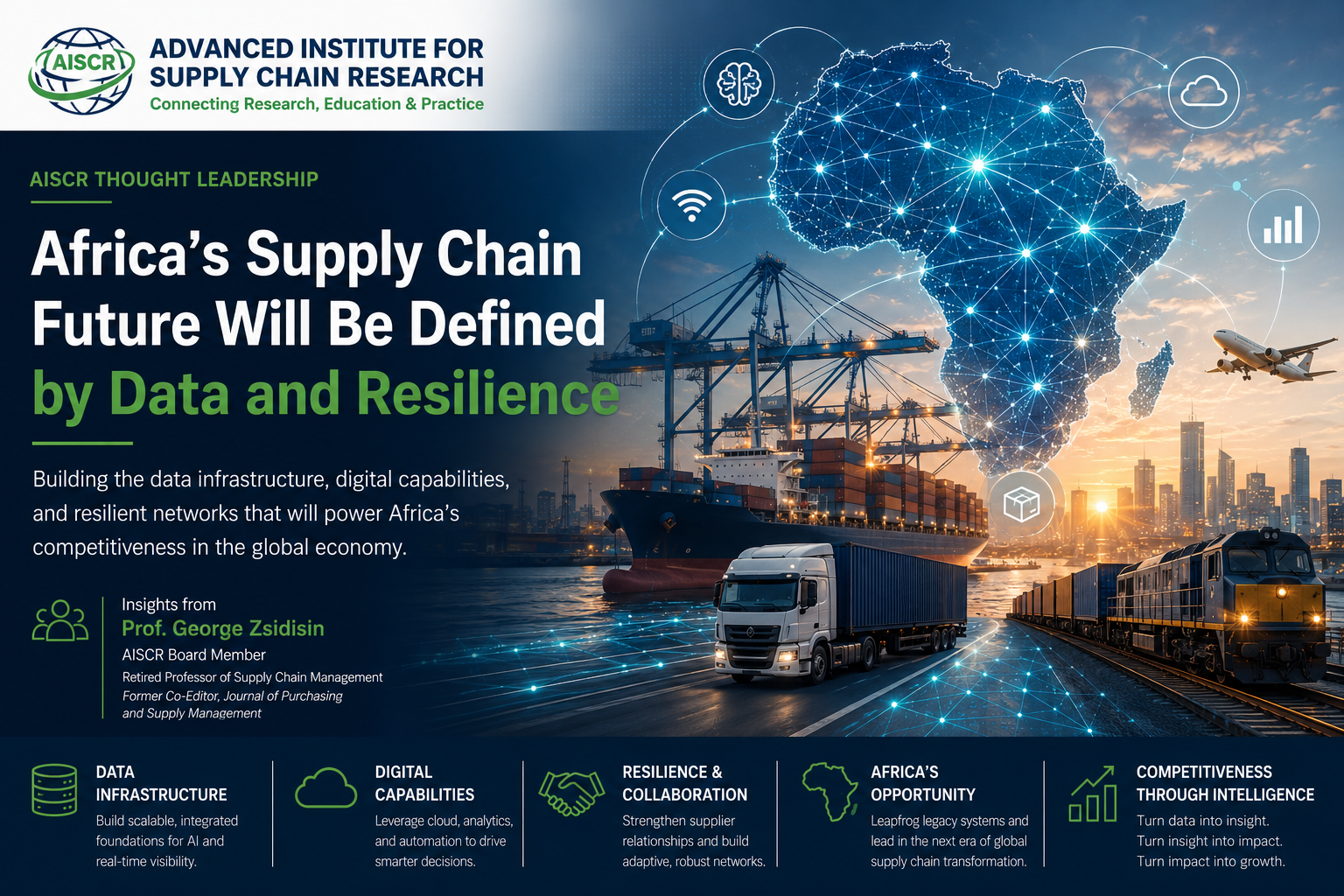
Africa’s Supply Chain Future Will Be Defined by Data and Resilience
AISCR Thought Leadership
Africa’s Supply Chain Future Will Be Defined by Data and Resilience
In a recent AISCR Thought Leadership interview, Professor George Zsidisin, internationally recognized supply chain scholar, former Co-Editor of the Journal of Purchasing and Supply Management, and AISCR Board Member, emphasized that innovation, resilience, and digital transformation will define the future of global supply chains.
According to Professor Zsidisin, organizations that fail to innovate risk falling behind in an increasingly interconnected and technology-driven global economy. He argues that modern supply chains can no longer rely solely on traditional operational models, particularly as disruption, digitalization, and geopolitical uncertainty continue to reshape global trade. Across Africa, organizations are making important progress in strengthening data governance and digital awareness. Recent AISCR findings show growing recognition of the importance of accountability, data quality management, and governance structures in supporting digital transformation. However, significant gaps remain in cloud infrastructure, systems integration, analytics capabilities, and real-time supply chain visibility. This presents both a challenge and an opportunity for African supply chains.
Artificial intelligence, predictive analytics, digital procurement, and automated decision-making all depend on integrated and scalable digital infrastructure. Without connected systems and reliable data ecosystems, organizations struggle to achieve operational agility, forecasting accuracy, and supply chain resilience. Professor Zsidisin also noted that the COVID-19 pandemic demonstrated the importance of resilience and collaboration across supply networks. Organizations with stronger supplier relationships, better visibility, and more integrated systems were generally better positioned to respond to disruption and recover more quickly.
For Africa, these lessons are especially important as governments and businesses pursue industrialization, regional integration, and digital trade through initiatives such as the African Continental Free Trade Area (AfCFTA). Organizations that invest early in digital infrastructure, cybersecurity, analytics, and systems interoperability will likely emerge as leaders in the next phase of supply chain transformation. At the same time, Africa has a unique opportunity to leapfrog legacy systems through cloud technologies, mobile platforms, AI-enabled logistics, and digital procurement ecosystems.
At AISCR, we believe the future of African supply chains will be shaped by research, innovation, resilience, and evidence-based decision-making. As Professor Zsidisin emphasized during the interview, supply chains ultimately exist to improve how societies access critical goods and services, from food and healthcare to trade and industrial development.
In the years ahead, data infrastructure will become not simply an operational tool, but a strategic asset for competitiveness, resilience, and sustainable economic growth.
Download the AISCR Though Leadership Series_May 2026

Related Posts